Explore a subject through time
Technology timeline
Machines, computing, transport and inventions.
38 moments in QuoAnno
Reading the timeline
A wider chronology
Technological change is usually cumulative. A machine or device associated with one inventor often depends on materials, techniques, earlier prototypes, manufacturing systems and the work of many people. Dates may mark a patent, a demonstration, practical adoption or a public launch rather than a single moment of invention.
Reading technology as a timeline makes those distinctions easier to see. Printing, steam power, electricity, transport, telecommunications and computing developed at different speeds, then combined to reshape work, travel, media and domestic life.
What this category covers
Themes to follow
Making and manufacturing
Tools, machines and production methods that changed how objects could be made.
Energy and transport
Engines, electrical systems and vehicles that moved people, goods and power.
Communication
Printing, telephony and electronic media that accelerated the movement of information.
Computing
Hardware, software and interfaces that brought programmable systems into everyday use.
Across the category
Timeline highlights
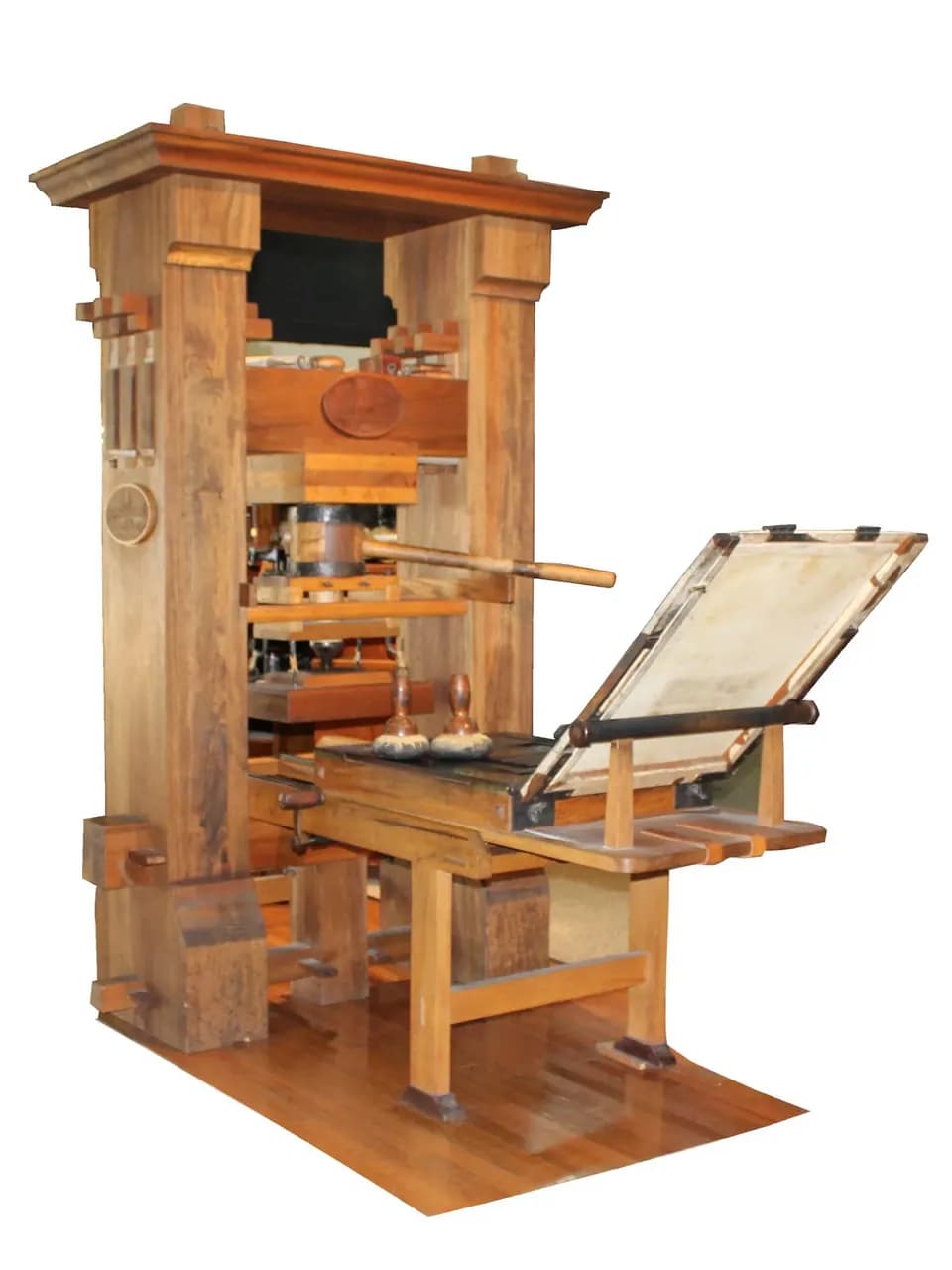
Gutenberg’s movable-type printing system is operating in Mainz
Printing with movable type existed centuries earlier in East Asia; Gutenberg’s system had enormous impact in Europe.
Newcomen’s atmospheric steam engine enters practical use
It preceded James Watt’s later efficiency improvements.
The Jacquard loom enters use
The Jacquard machine is a device fitted to a loom that simplifies the process of manufacturing textiles with such complex patterns as brocade, damask and matelassé.
Thomas Edison demonstrates the phonograph
A phonograph, later called a gramophone, and since the 1940s a record player, or more recently a turntable, is a device for the mechanical and analogue reproduction of sound.
Marconi demonstrates wireless telegraphy
Guglielmo Giovanni Maria Marconi, 1st Marquess of Marconi, was an Italian electrical engineer, inventor, and politician known for his creation of a practical radio wave-based wireless telegraph system.
Ford introduces the moving assembly line
An assembly line, often called progressive assembly, is a manufacturing process where the unfinished product moves in a direct line from workstation to workstation, with parts added in sequence until the final product is completed.
The transistor is demonstrated at Bell Labs
The transistor became fundamental to modern electronics and computing.
Apple introduces the first iPhone
Steve Jobs introduced the iPhone in January 2007; it went on sale in June.
Continue researching
Further reading
These independent reference works and institutions provide broader context. QuoAnno links to them for further reading; the summaries on this page are original and are not copied from those sources.
Test your chronology
