Explore a subject through time
Modern History timeline
Revolutions, wars, politics and social change in the modern era.
38 moments in QuoAnno
Reading the timeline
A wider chronology
Modern history is shaped by expanding states, industrial economies, mass politics and increasingly connected societies. Its chronology brings revolutions and wars into view alongside public health, communications, civil rights and the everyday changes created by factories, transport and urban growth.
No single starting date defines the modern world everywhere. This page therefore treats the period as a connected timeline rather than a rigid boundary: events in one region often depend on longer histories elsewhere, and political milestones sit beside social, economic and technological change.
What this category covers
Themes to follow
Revolution and reform
Movements that challenged governments, laws, social orders and political representation.
Industry and cities
Mechanization, transport and urban growth that transformed work and daily life.
War and diplomacy
Conflicts, alliances and settlements whose effects crossed national borders.
Rights and independence
Campaigns against slavery, empire, exclusion and unequal citizenship.
Across the category
Timeline highlights
Martin Luther circulates the Ninety-five Theses
The famous story of Luther nailing the text to a church door is debated, but 1517 is secure.
Peter the Great founds Saint Petersburg
Saint Petersburg, formerly known as Petrograd, and later Leningrad, is the second-largest city in Russia, after Moscow, the nation's capital.
The Haitian Revolution begins
The Haitian Revolution, also known as the Haitian War of Independence, was a successful insurrection by enslaved Africans against French colonial rule in Saint-Domingue, now the sovereign state of Haiti.
Slavery Abolition Act takes effect across most of the British Empire
Former slaveholders, not enslaved people, received government compensation.
The Meiji Restoration transforms Japan
The Meiji Restoration, referred to at the time as the Honorable Restoration, was a political event that restored imperial rule to Japan in 1868 under Emperor Meiji and led to the Westernisation of Japan.
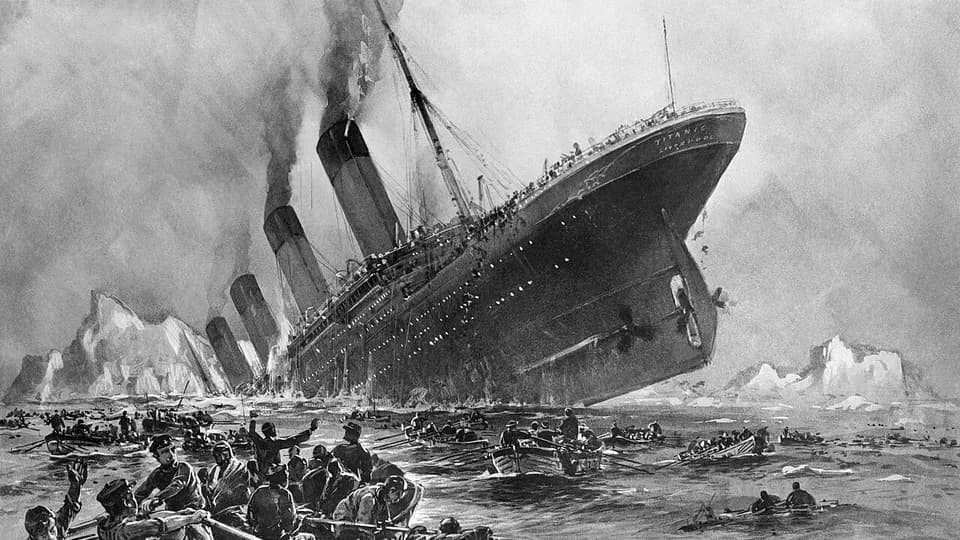
Titanic sinks in the North Atlantic
RMS Titanic sank in the North Atlantic Ocean on 15 April 1912.
India becomes independent
The Indian Independence Act created the independent dominions of India and Pakistan and ended British rule over the region.
WHO characterizes COVID-19 as a pandemic
The declaration came on 11 March 2020.
Continue researching
Further reading
These independent reference works and institutions provide broader context. QuoAnno links to them for further reading; the summaries on this page are original and are not copied from those sources.
Test your chronology
